Standard Albanian
In order to battle this religious ambiguity, in 1304, Dominicans were ordered by Pope Benedict XI to enter the nation and to instruct the locals within the Latin rite. After the Fourth Crusade, a new wave of Catholic dioceses, churches and monasteries have been founded, a number of different religious orders started spreading into the country, and papal missionaries traversed its territories.
The preliminary outcomes of the 2011 census appeared to offer extensively completely different results, with 70% of respondents refusing to declare belief in any of the listed faiths. The Albanian Orthodox Church officially refused to recognize the results, claiming that 24% of the entire inhabitants adhered to its faith. Some Muslim Community officials expressed unhappiness with the information claiming that many Muslims were not counted and that the number of adherents numbered some 70% of the Albanian inhabitants.
Halvetis are stated to dislike both the dominance of mainline Sunnis in the generic “Muslim” group and the non-recognition of their sect’s separate existence, but additionally the dominance of Bektashis in the Dervish scene. In the North, the unfold of Islam was slower as a result of resistance of the Roman Catholic Church and the area’s mountainous terrain. In the middle and south, however, Catholicism was not as robust and by the tip of the 17th century the region had largely adopted the religion of the rising Albanian Muslim elite.
Greek
In the late Bronze Age and early Iron Age a number of possible inhabitants actions occurred in the territories of contemporary Albania, for instance the settlement of the Bryges in areas of southern Albania-northwestern Greece and Illyrian tribes into central Albania. The latter derived from early an Indo-European presence within the western Balkan Peninsula. The motion of the Illyrian tribes can be assumed to coincide with the beginning Iron Age within the Balkans during the early 1st millennium BC.
Further readingBooks about Albania and the Albanian people (scribd.com) Reference of books (and some journal articles) about Albania and the Albanian folks; their historical past, language, origin, tradition, literature, etc. Deliberate programmes of economic and democratic reforms were put in place, but Albanian inexperience with capitalism led to the proliferation of pyramid schemes, which weren’t banned due to the corruption of the government.
However a later reference to Albanians from the identical Attaleiates, concerning the participation of Albanians in a insurrection around 1078, is undisputed. At this point, they’re already absolutely Christianized, though Albanian mythology and folklore are part of the Paleo-Balkan pagan mythology, particularly showing Greek influence. The fragmented manuscript differentiated the world into seventy-two languages and three spiritual classes together with Christians, half-believers and non-believers.
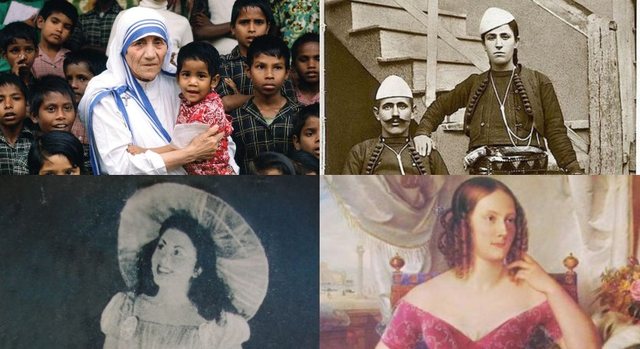
Mother Teresa, an ethnic Albanian, visited Tirana in 1989, the place she was obtained by the foreign minister and by Hoxha’s widow. In December 1990, the ban on non secular observance was formally lifted, in time to permit hundreds of Christians to attend Christmas providers. The Catholic Church and plenty of Catholics had been supportive of the invasion, however Fischer states there have been many exceptions, notably of among the many village priests albanian singles since most of them had been educated in Albania and had been fairly nationalistic. But the hierarchy on the other hand was fairly supportive, with the apostolic delegate seeing it as a possibility to offer extra freedom to Albanians who wanted to turn into Catholic. The Catholic Church had additionally probably the most monetary support per member in the course of the Italian occupation.
Albanian is a recognised minority language in Croatia, Italy, Montenegro, Romania and in Serbia. Albanian can be spoken by a minority in Greece, specifically in the Thesprotia and Preveza regional items and in a couple of villages in Ioannina and Florina regional models in Greece. Centuries-outdated communities talking Albanian dialects could be discovered scattered in Croatia (the Arbanasi), Greece (the Arvanites and some communities in Epirus, Western Macedonia and Western Thrace), Italy (the Arbëreshë) as well as in Romania, Turkey, and Ukraine. Two sorts of the Tosk dialect, Arvanitika in Greece and Arbëresh in southern Italy, have preserved archaic components of the language. The two main Albanian dialects, Gheg and Tosk, are primarily distinguished by phonological differences, and are mutually intelligible, with Gheg spoken to the north and Tosk spoken to the south of the Shkumbin river.
Afterwards, the first multi-celebration elections happened since the communists assumed energy in Albania. Pursuant to a 29 April 1991 interim basic legislation, Albanians ratified a constitution on 28 November 1998, establishing a democratic system of government primarily based upon the rule of regulation and guaranteeing the safety of fundamental human rights. The People’s Republic of Albania performed a role within the Sino-Soviet split far outweighing both its size or its importance in the communist world. In 1958, the nation stood with the People’s Republic of China in opposing Moscow on issues of peaceable coexistence, de-Stalinization, and Yugoslavia’s separate road to socialism via decentralization of economic life.
Albanians in Turkey at present and transnational hyperlinks with Balkan Albanians
Part of the Albanian inhabitants steadily transformed to Islam, with many joining the Sufi Order of the Bektashi. Converting from Christianity to Islam brought appreciable benefits, including access to Ottoman trade networks, bureaucratic positions and the army. As a end result, many Albanians came to serve within the elite Janissary and the administrative Devşirme system.